

What is the installation tolerance of a roller guide?
Jun 04, 2026
The roller guide is a critical component that ensures smooth, precise movement.
Installation Tolerance
Installation tolerance refers to the allowable deviation from the ideal installation parameters of a roller guide. It encompasses a range of factors, including linearity, parallelism, flatness, and perpendicularity. These tolerances are essential because they directly affect the guide's ability to function correctly and efficiently.
For instance, if a roller guide is not installed with the correct linearity, the rollers may not move smoothly along the guide rail. This can lead to increased friction, premature wear, and ultimately, a decrease in the guide's lifespan. Similarly, if the guide is not parallel to the machine's axis, it can cause uneven loading on the rollers, resulting in uneven wear and potential misalignment.
Importance of Installation Tolerance
1. Smooth Operation
When the installation tolerances are within the specified range, the rollers can move freely and smoothly along the guide rail. This reduces friction and minimizes the risk of jamming, which is crucial for the continuous operation of the machinery.
2. Accuracy
Precision is key in many industrial applications. A roller guide installed with the correct tolerances can provide high-precision movement, which is essential for tasks such as machining, measuring, and assembly.
3. Durability
Proper installation tolerances help distribute the load evenly across the rollers and the guide rail. This reduces stress on individual components, thereby extending the lifespan of the roller guide.
Factors Affecting Installation Tolerance
1. Manufacturing Quality
The quality of the roller guide itself plays a significant role. High-quality guides are typically manufactured to tighter tolerances, which makes it easier to achieve the desired installation tolerance. For example, a well - machined guide rail with precise dimensions will be easier to install accurately compared to a guide with rough or inconsistent surfaces.
2. Installation Environment
The environment in which the roller guide is installed can also affect the installation tolerance. Factors such as temperature, humidity, and vibration can cause the guide to expand, contract, or shift over time. Therefore, it's important to consider these environmental factors when setting the installation tolerances.
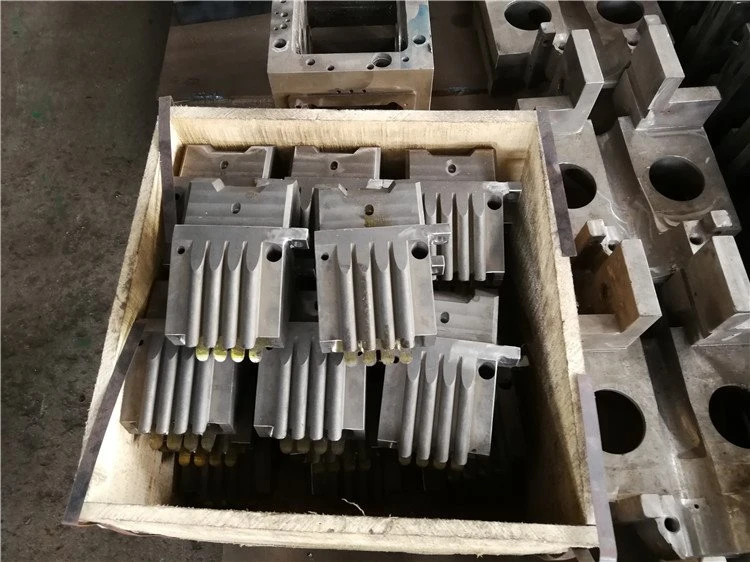

3. Installation Method
The method used to install the roller guide can significantly affect the installation tolerance. Improper installation techniques, such as using incorrect fasteners or not following the manufacturer's instructions, can lead to misalignment and inaccurate installation.
Measuring Installation Tolerance
To ensure that the roller guide is installed within the specified tolerances, it's necessary to measure various parameters.
1. Linear Measurement
Linear measurement is used to check the straightness of the guide rail. This can be done using a straightedge or a laser alignment tool. The deviation from the ideal straight line should be within the specified tolerance.
2. Parallelism Measurement
Parallelism measurement is used to ensure that the guide rail is parallel to the machine's axis or other components. This can be measured using a dial indicator or a laser alignment system.
3. Flatness Measurement
Flatness measurement is used to check the flatness of the guide rail surface. A surface plate or a height gauge can be used to measure the deviation from the ideal flat surface.
Installation Tolerance Standards
Different industries and applications may have different installation tolerance standards for roller guides. For example, in the semiconductor industry, where high precision is required, the installation tolerances may be very tight, often in the range of a few micrometers. On the other hand, in less critical applications, such as some general-purpose machinery, the tolerances may be more relaxed.
As a Roller Guide supplier, Tingxuan Industry provides detailed installation instructions and tolerance specifications for our products. These specifications are based on industry standards and our own extensive testing and experience. By following these guidelines, our customers can ensure that the roller guides are installed correctly and perform optimally.
Impact of Incorrect Installation Tolerance
Let's consider a case where a roller guide was installed with incorrect tolerances. A manufacturing company was using a roller guide in a precision machining application. Due to improper installation, the guide was not parallel to the machine's axis. As a result, the rollers experienced uneven loading, which led to premature wear on one side of the guide. This caused the machining accuracy to decline, resulting in defective products and increased production costs.
After identifying the problem, the company reinstalled the roller guide with the correct tolerances. Once the guide was properly installed, the machining accuracy improved significantly, and the production efficiency increased.
If you're in the market for a reliable Roller Guide or Mill Guide, we'd be more than happy to assist you.
Welcome to contact us. Thank you.