

Rolling Mill Liner
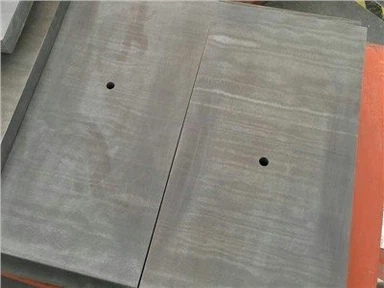
Rolling mill liners, often referred to as mill housing liners or slipper pads, serve as the critical interface between moving parts.
- Fast Delievery
- Quality Assurance
- 24/7 Customer Service
Rolling Mill Liners-essential high-precision copper alloy components Parts

High-Performance Rolling Mill Liners:
In the high-pressure environment of a rolling mill, dimensional stability and friction management are paramount. Rolling mill liners, often referred to as mill housing liners or slipper pads, serve as the critical interface between moving parts. By utilizing premium copper alloys, these liners protect expensive mill housings from wear while ensuring the precise alignment of rolls under massive hydraulic loads.
1. Copper Raw Materials
Based on industrial standards, the following materials are most representative for rolling mill applications:
| Material Grade | Composition (Main) | Key Characteristics |
| Aluminum Bronze (C95400) | Cu-Al-Fe-Mn | High strength, excellent corrosion resistance, and high anti-galling properties. |
| Tin Bronze (C90700) | Cu-Sn-P | High hardness, superior wear resistance, and good emergency running properties. |
| Manganese Bronze (C86300) | Cu-Zn-Mn-Al | Extreme load-bearing capacity; ideal for high-pressure, low-speed applications. |
2. Copper Material Advantages:
Copper alloys are the preferred choice for rolling mill liners over steel for several mechanical reasons:
Superior Anti-Galling: Copper acts as a "sacrificial" material. When moving against a steel mill housing, the copper liner prevents the two surfaces from welding together (seizing) under heat and pressure.
Thermal Dissipation: Its high thermal conductivity quickly draws heat away from friction points, preventing localized overheating that can lead to component failure.
Vibration Damping: The natural elasticity of bronze helps absorb micro-vibrations, contributing to a smoother rolling process and better surface quality of the final steel product.
3. Application:

Hot Rolling Mills: Guiding the work roll chocks within the mill housing.
Cold Rolling Mills: Providing high-precision alignment for thin-gauge metal processing.
Slipper Pads: Acting as the wear interface in universal joints and drive spindles.
Screw-down Nuts: Supporting the heavy-duty threaded mechanisms that adjust roll gaps.
4. Processing & Manufacturing Advantages
Our manufacturing process is optimized to deliver non-standard parts that exceed OEM specifications.
Centrifugal Casting Technology: Unlike traditional sand casting, our liners are produced via centrifugal casting. This creates a dense, fine-grained structure free of blowholes and porosity, significantly increasing fatigue life.
Precision Machining: Utilizing multi-axis CNC milling, we produce complex oil groove patterns (V-shaped or cross-hatch) and precision counterbore holes. This ensures optimal lubricant distribution across the entire sliding surface.
Customized Tolerances: We specialize in "tailor-made" solutions, machining liners to exacting tolerances based on customer drawings to ensure a perfect fit during maintenance shutdowns.
Tingxuan Industry rolling mill liners can move to minimize downtime and reduce long-term maintenance costs. By combining world-class copper alloys with advanced centrifugal casting and precision CNC machining, our factory provides high-performance rolling mill liners with durability and fast production.
Welcome to consult if you are looking for the rolling mill liners factory suppliers. Thanks.
Hot Tags: rolling mill liner, China, suppliers, manufacturers, factory, customized, Taper Sleeve, Heating Plate, Steel Strapping, Piston RAMS, Universal Joint, Polyester Wire Mesh Filter